


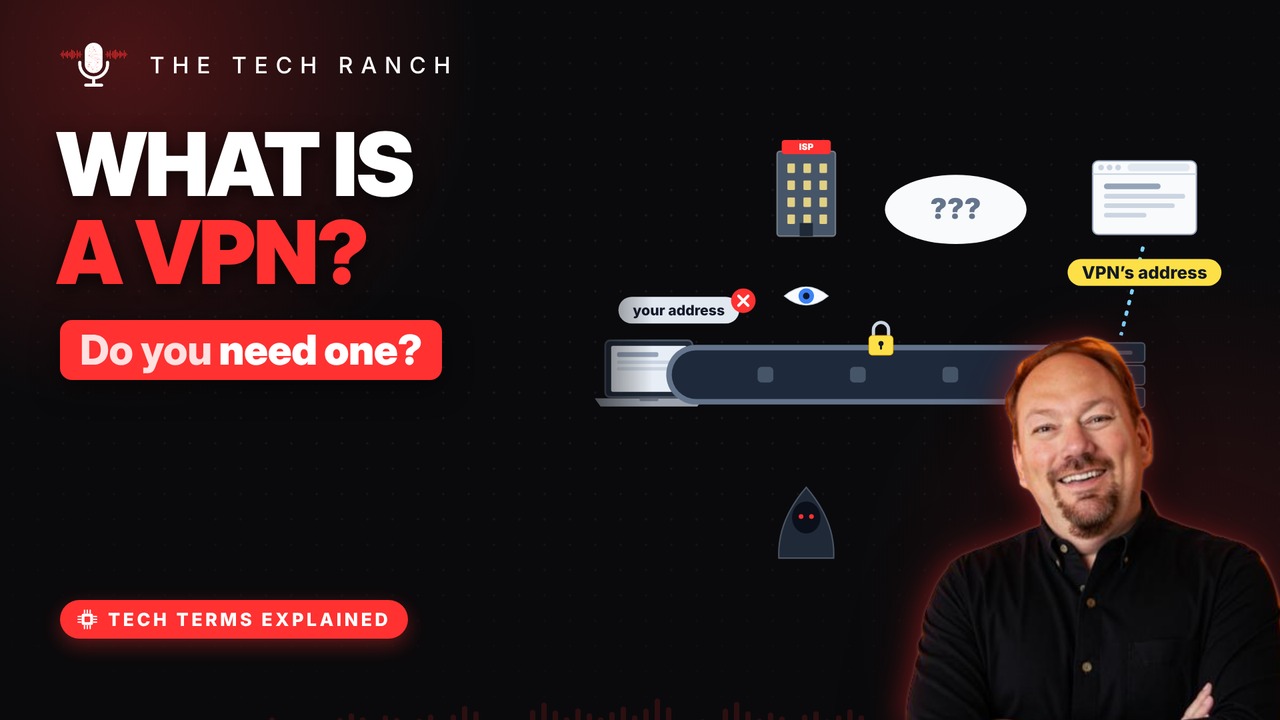
A VPN sends your internet traffic through an encrypted tunnel to a server run by the VPN company. See what that hides from your internet provider and public Wi-Fi, what it doesn’t hide, why it won’t stop scams, and when a VPN is actually worth using.
A private tunnel
VPN = Virtual Private Network. It wraps your traffic in an encrypted tunnel. The tunnel runs from your device to a VPN server. From there, your traffic heads out to the internet.
What it hides
Your internet provider sees the tunnel, not the sites. Others on public Wi-Fi can’t read your traffic. Websites see the VPN’s address, not yours. So sites think you’re wherever the server is.
What it doesn’t hide
The VPN company can see your traffic. Log in to a site and it knows it’s you. Cookies and trackers can still follow you. EFF: ‘A VPN is not a tool for anonymity’.
Not a scam shield
A VPN won’t block phishing emails. It won’t stop malware you download. A fake website is still fake through a VPN. Updates and caution still do the heavy lifting.
When a VPN helps
On public Wi-Fi you don’t trust. To reach your work network from home. To keep your provider from seeing sites you visit. Choose carefully: you’re shifting trust to it.
Bonus: Free VPNs
Running VPN servers costs real money. A VPN provider can collect or sell what it sees. Read what an app collects and shares first.
More Tech Terms, Explained
This is part of my Tech Terms Explained series: everyday tech words, explained in plain English, with simple animations. Watch the whole series on YouTube and subscribe to The Tech Ranch so you don’t miss the next one. Short on time? Here’s the quick Short version.
Found this helpful? Give the video a thumbs up on YouTube. Got a tech word you’d like explained? Ask in the YouTube comments and it might be the next video.