

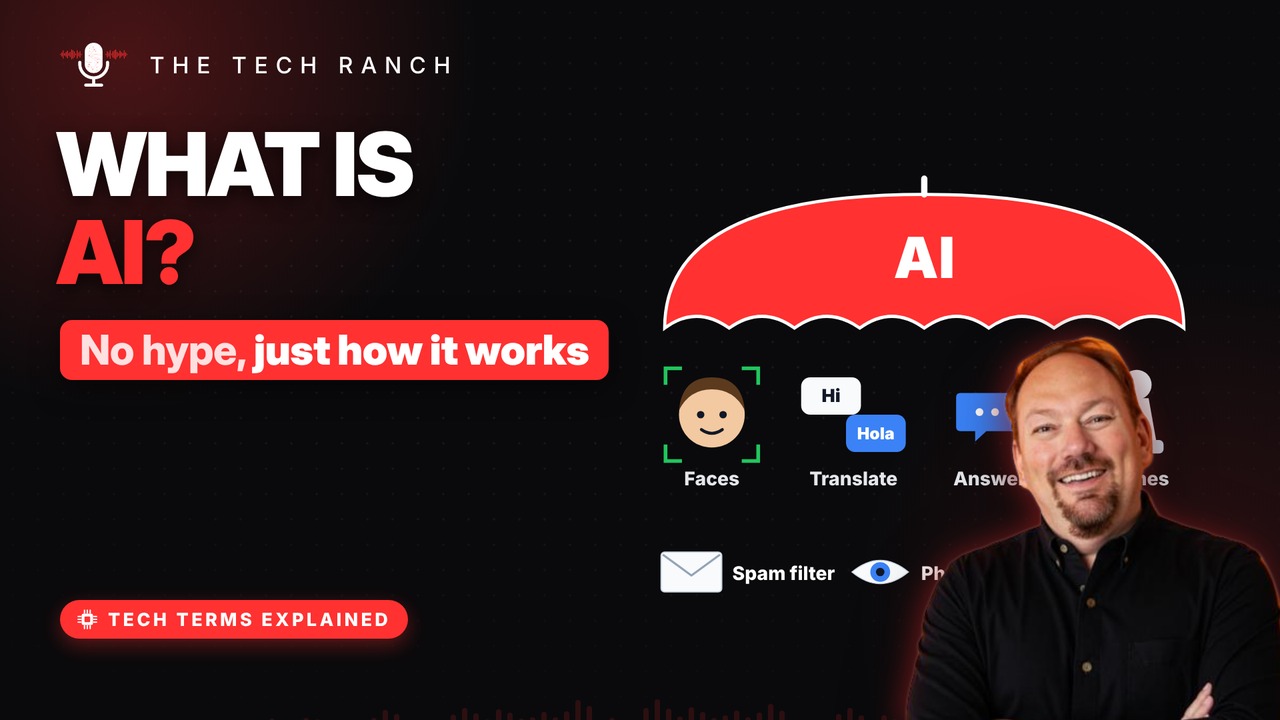
Artificial intelligence means computers doing tasks we usually link to human intelligence, and most of today’s AI learns patterns from examples. This animated explainer shows how that works in plain English, what AI is good at, how it can be confidently wrong or biased, and how to use it wisely.
Computers doing smart tasks
AI is computers doing tasks we link to human smarts. Recognizing faces, translating, answering questions. It’s a big umbrella covering many techniques. You use it daily: spam filters, photo search, maps.
Rules vs. learning
Early AI followed rules people wrote by hand. Modern AI mostly learns patterns from examples. Show it thousands of cat photos; it learns ‘cat.’. That approach is called machine learning.
Patterns, not thoughts
AI finds patterns in huge amounts of data. It doesn’t think the way a person does. It’s strongest at the jobs it was trained for. Step outside that, and it can stumble.
What AI gets wrong
It can be confidently wrong. Biased examples can lead to biased results. It may latch onto the wrong clue in the data. One X-ray AI keyed on the machine, not the illness.
Using AI wisely
Treat AI like a fast, helpful assistant. Check important facts with trusted sources. Don’t share private info you wouldn’t post. Humans stay responsible for the final call.
Bonus: Where the name came from
Four researchers proposed a summer project. Their proposal coined ‘artificial intelligence.’. The workshop met in 1956 and launched a field.
More Tech Terms, Explained
This is part of my Tech Terms Explained series: everyday tech words, explained in plain English, with simple animations. Watch the whole series on YouTube and subscribe to The Tech Ranch so you don’t miss the next one.
Found this helpful? Give the video a thumbs up on YouTube. Got a tech word you’d like explained? Ask in the YouTube comments and it might be the next video.