

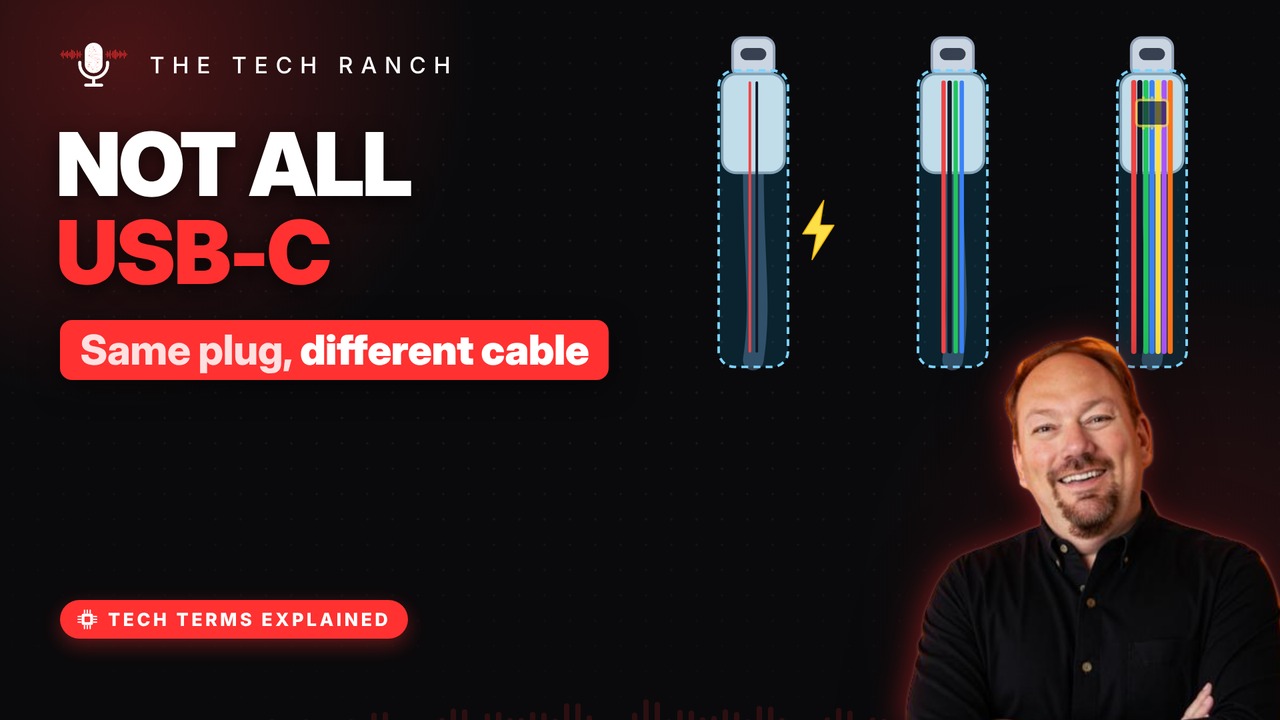
USB-C is the name of a plug shape, not a speed or a power level. This animated explainer shows why the plug works either way up, how two identical-looking cables can charge and copy at very different speeds, and how USB-C can carry up to 240 watts.
A shape, not a speed
USB-C is the name of the plug shape. Small, oval and the same on both sides. It doesn’t tell you how fast it charges or copies. That depends on the cable and the devices.
No wrong way up
Older USB plugs only fit one way. USB-C works right-side-up or upside-down. Inside the connector: 24 tiny pins. No more flipping it three times.
Not all cables are equal
Some USB-C cables only do basic USB 2.0 data. They’re often sold as simple charging cables. Others carry video and super-fast data. The plug alone won’t tell you; check the label.
Power up to 240 watts
USB-C can carry phone-size power up to laptop-size. The top standard allows up to 240 watts. Heavy-duty cables carry a tiny ID chip inside. Charger, cable and device agree before power flows.
One plug for everything
Phones, tablets, laptops and headphones use it. The EU made it the required charging port. New phones sold there needed it from late 2024. Fewer drawers full of odd cables.
Bonus: Read the cable label
Look for the watts and the data speed on the box. Certified cables can carry official logos. A no-name cable may be slower than you think.
More Tech Terms, Explained
This is part of my Tech Terms Explained series: everyday tech words, explained in plain English, with simple animations. Watch the whole series on YouTube and subscribe to The Tech Ranch so you don’t miss the next one. Short on time? Here’s the quick Short version.
Found this helpful? Give the video a thumbs up on YouTube. Got a tech word you’d like explained? Ask in the YouTube comments and it might be the next video.