


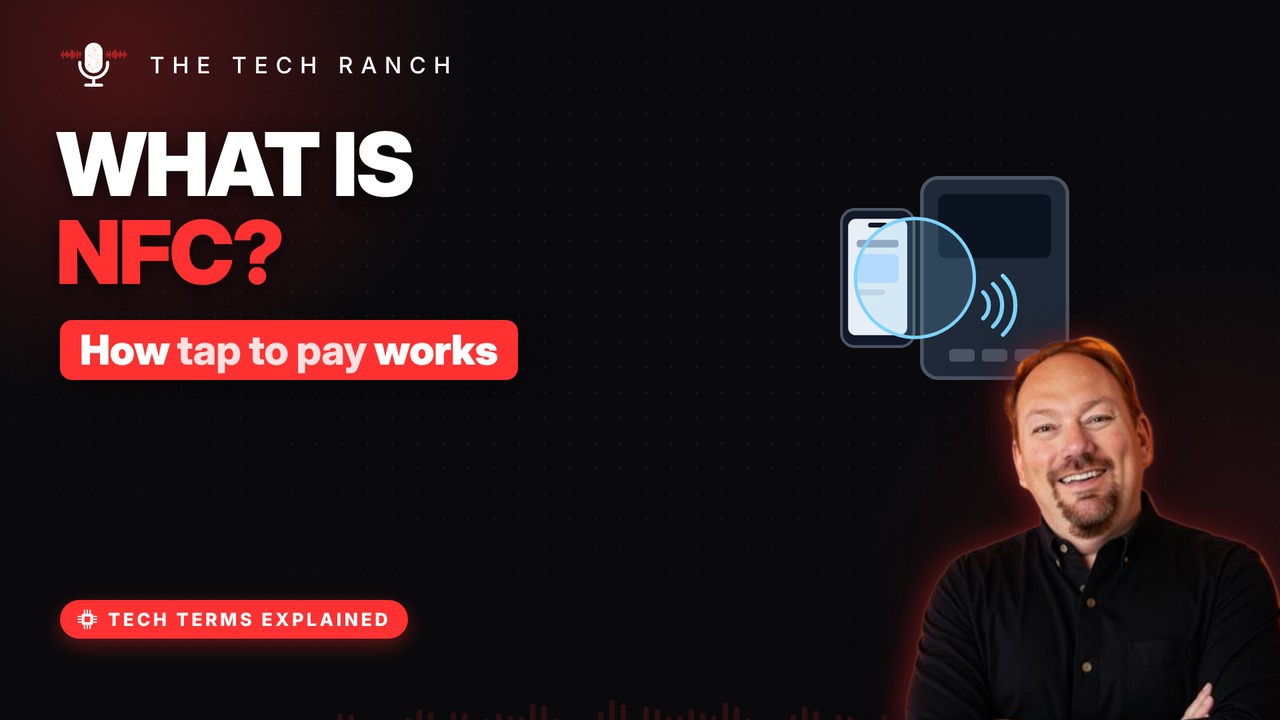
NFC is short-range radio that only works when two devices are a few centimeters apart. See how some NFC tags run with no battery at all, how tap to pay works, and why your phone uses a stand-in number instead of your real card number.
Near Field Communication
NFC = Near Field Communication. A radio link that only works up close. About 4 cm — roughly 1.5 inches — or less. That short range is a feature, not a flaw.
Power without a battery
Some NFC tags have no battery at all. The phone’s magnetic field powers them. The tag wakes up and sends back its data. Think smart stickers and many tap cards.
Tap to pay
Add a card to your phone’s wallet app. Hold the phone near the payment reader. Approve with your face, finger or PIN. The NFC chip sends the payment in a blink.
A stand-in number
Your real card number isn’t stored on the phone. The phone uses a stand-in number instead. Each payment gets a one-time security code. A copied code won’t work for another purchase.
Not just payments
Some headphones pair with a quick tap. Smart stickers can trigger phone shortcuts. Transit cards and some door badges use it. The tiny range makes accidental reads unlikely.
Bonus: Can someone skim your phone?
A thief’s reader would need to be centimeters away. Phone wallets need you to unlock or approve. They send a stand-in number, not your card’s.
More Tech Terms, Explained
This is part of my Tech Terms Explained series: everyday tech words, explained in plain English, with simple animations. Watch the whole series on YouTube and subscribe to The Tech Ranch so you don’t miss the next one.
Found this helpful? Give the video a thumbs up on YouTube. Got a tech word you’d like explained? Ask in the YouTube comments and it might be the next video.