


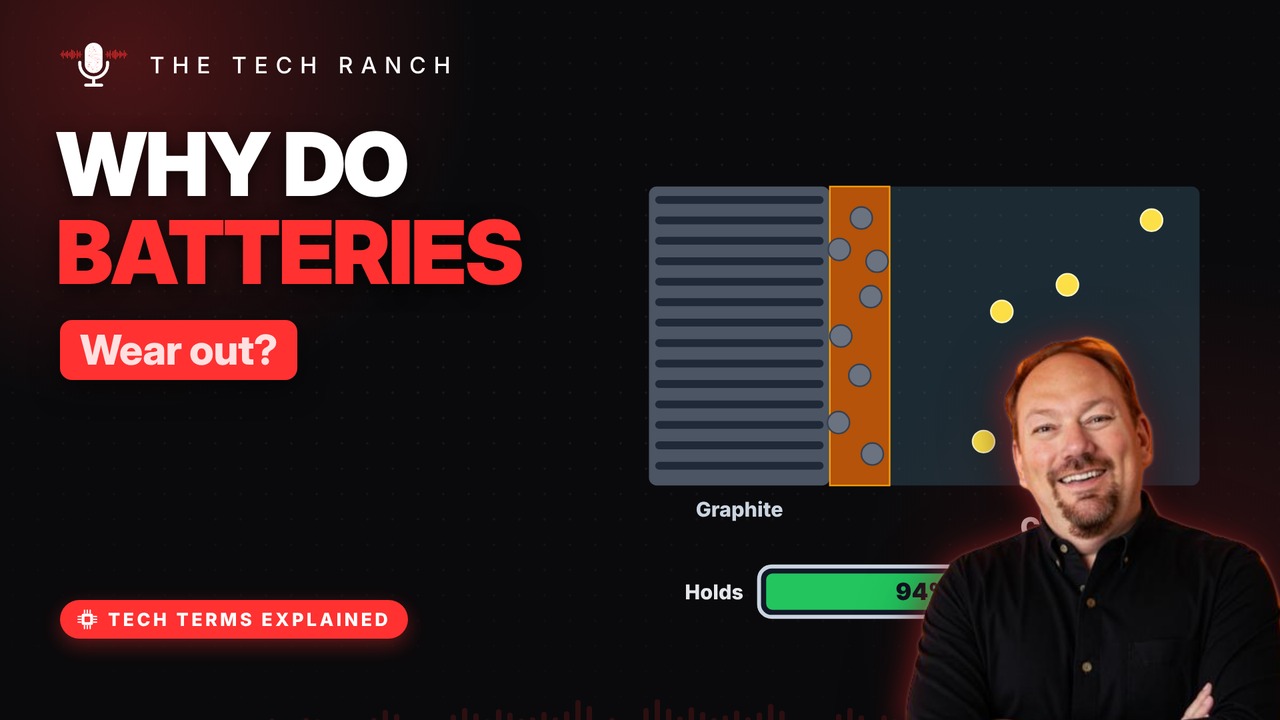
Every time a lithium-ion battery charges and drains, a little lithium gets trapped for good, so it slowly holds less. This animated explainer shows what a charge cycle really is, why heat and a full charge age batteries fastest, and which old battery myths you can forget.
Lithium on the move
A battery has two sides with a liquid between. Charging pushes lithium into the graphite side. Using the phone lets it flow back across. That back-and-forth releases the power you use.
Every trip costs a little
A thin crust forms where lithium meets the liquid. Building it traps some lithium for good. Over time the crust grows and traps more. Less free lithium = less charge it can hold.
What counts as a cycle
One cycle = using 100% of the battery’s capacity. 75% today plus 25% tomorrow = one cycle. So topping up often doesn’t waste cycles. Many phones are rated to keep 80% after 500+ cycles.
Heat is enemy number one
Heat speeds up the crust-building reactions. Being hot and full is the worst combo. A year kept full at 104°F (40°C): about 65% left. A year kept full at room temp: about 80%.
Myths vs. what helps
Myth: drain it to zero first. Not for lithium-ion. Partial charges are fine, even gentler. Avoid sitting very low or very full for long stretches. Let ‘optimized charging’ hold it near 80% overnight.
Bonus: Cold is different
Cold makes a battery act weak, but it bounces back. Warm it up and the lost range returns. But charging below freezing can cause lasting damage.
More Tech Terms, Explained
This is part of my Tech Terms Explained series: everyday tech words, explained in plain English, with simple animations. Watch the whole series on YouTube and subscribe to The Tech Ranch so you don’t miss the next one. Short on time? Here’s the quick Short version.
Found this helpful? Give the video a thumbs up on YouTube. Got a tech word you’d like explained? Ask in the YouTube comments and it might be the next video.