


By Marlo Anderson – The Tech Ranch
Internet from space used to mean slow, laggy connections. Starlink flipped that by flying thousands of satellites much closer to Earth. Here’s how it works.
Satellite Internet, the Old Way
Older internet satellites sit about 22,236 miles up, so high that they seem to hover over one spot. Every click has to go up, down, up and down again, adding about half a second of lag.
Starlink Flies Way Lower
Starlink satellites fly about 340 miles (550 km) up, about 65 times closer. That cuts lag to about 25–35 thousandths of a second, smooth enough for video calls and gaming.
Why It Takes Thousands
Low satellites race by at about 17,000 mph, so each one is over your house for only a few minutes. To cover the sky you need lots of them: about 10,000 Starlink satellites are working as of October 2026.
A Dish That Aims Itself
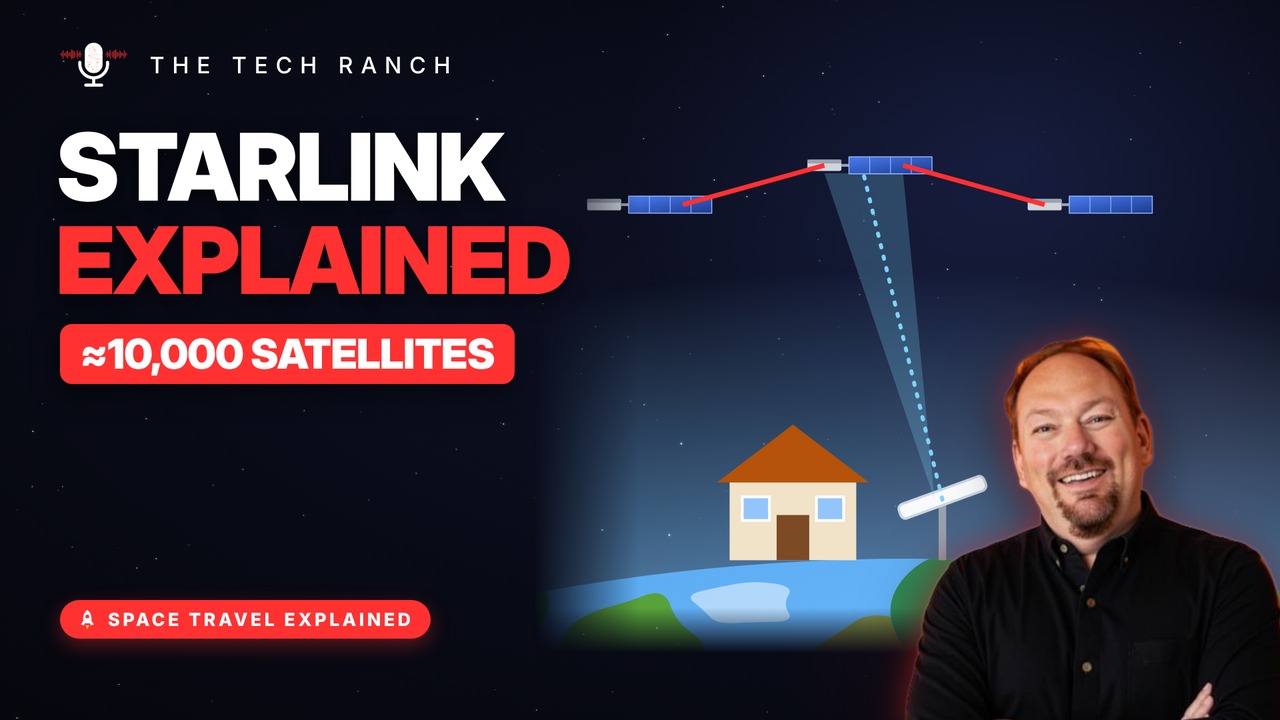
The flat Starlink dish is packed with hundreds of tiny antennas that work together to steer the beam electronically. It hops to a new satellite about every 15 seconds, and you never notice.
Lasers Between Satellites
Starlink satellites pass data to each other with laser links. That covers oceans and remote spots far from any ground station, so ships, planes and far-off cabins can get online.
Who Uses Starlink?
More than 12 million customers as of mid-2026, in about 160 countries and territories: rural homes, RVs, ships, airplanes, and disaster zones where ground networks are knocked out.
Bonus Fact: The Starlink Train
Right after launch, new Starlink satellites fly in a line. Shortly after sunset or before sunrise, they can look like a string of moving lights. Soon after, they climb higher and spread out.
More Space Travel, Explained
This is part of my Space Travel Explained series: big space questions, answered in plain English with simple animations. Watch the whole series on YouTube and subscribe to The Tech Ranch so you don’t miss the next one.
Found this helpful? Give the video a thumbs up on YouTube. Got a space question you’ve always wondered about? Ask it in the YouTube comments and it might be the next video.