

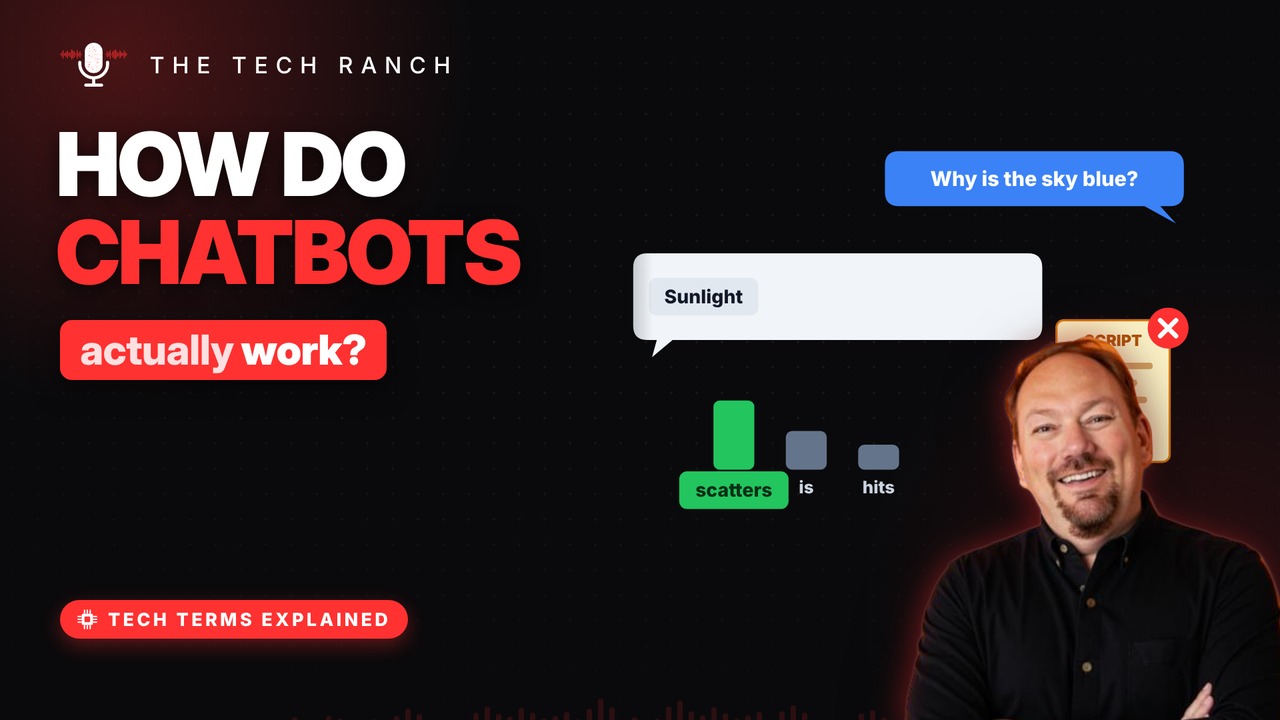
AI chatbots run on large language models that write by predicting the next word, again and again. This animated explainer shows how text becomes tokens, how these models are trained on huge amounts of text, why they sometimes make things up with confidence, and how to use them well.
Autocomplete on overdrive
LLM = Large Language Model. At its core, it predicts the next word. Then the next, and the next, building an answer. Like phone autocomplete, but vastly bigger.
Words become tokens
Text is chopped into pieces called tokens. A token is often part of a word. Rule of thumb: 100 tokens ≈ 75 English words. The model works with these pieces, not letters.
Trained on oceans of text
It learns by guessing next words in huge text collections. Each wrong guess nudges its internal settings. Patterns of grammar, facts and style soak in. Later training shapes it into a helpful assistant.
Why it makes things up
It’s built to sound right, not to know it’s right. When unsure, it may still guess, fluently. Those confident errors are called hallucinations. Rare facts, like birthdays, trip it up most.
Using chatbots well
Great for drafting, explaining and brainstorming. Ask for sources, then check them yourself. Double-check numbers, names and dates. Unless it searches the web, it answers from training.
Bonus: The 2017 breakthrough
Researchers published a new design called the Transformer. It lets the model weigh each word against the others. Most modern chatbots are built on it.
More Tech Terms, Explained
This is part of my Tech Terms Explained series: everyday tech words, explained in plain English, with simple animations. Watch the whole series on YouTube and subscribe to The Tech Ranch so you don’t miss the next one. Short on time? Here’s the quick Short version.
Found this helpful? Give the video a thumbs up on YouTube. Got a tech word you’d like explained? Ask in the YouTube comments and it might be the next video.