


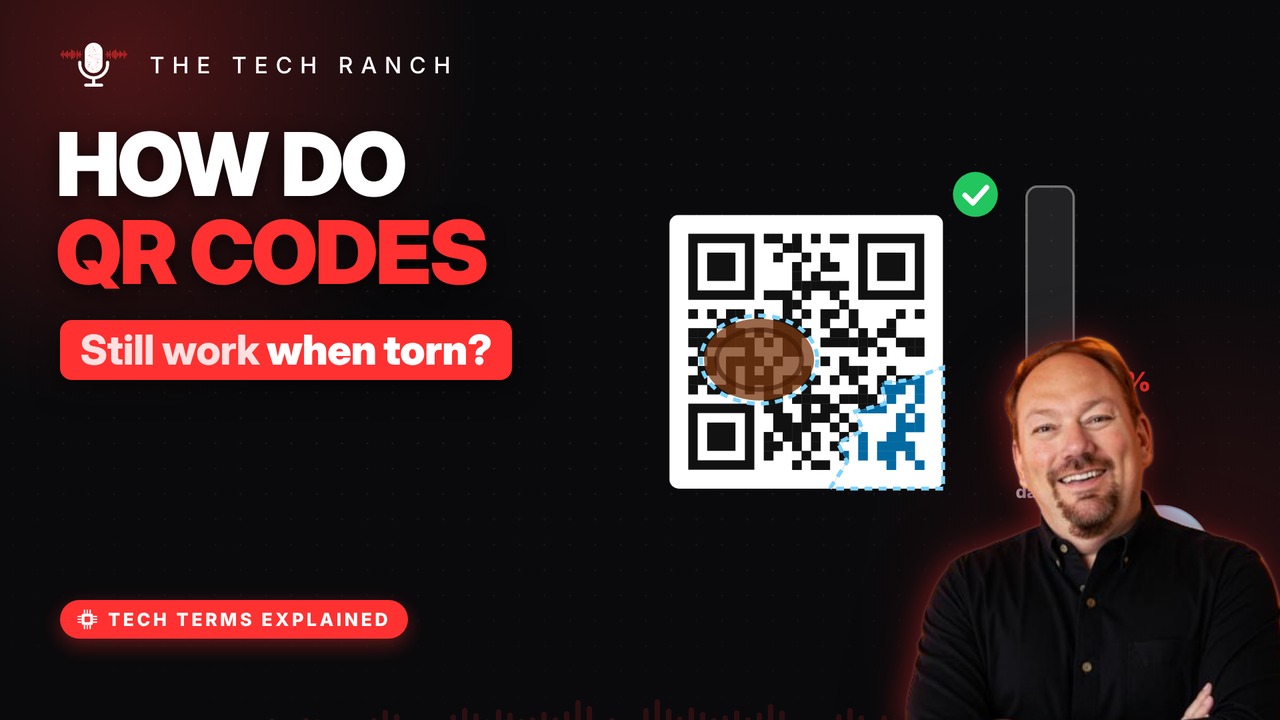
A QR code stores data as a grid of dark and light squares that your phone reads as 1s and 0s. This animated explainer shows why QR codes were invented in a car-parts factory, what the three big corner squares do, how built-in backup data lets a damaged code still scan, and how to avoid fake QR code scams.
A barcode, but 2D
Regular barcodes store data in one row of lines. QR codes store it in a grid of squares. A scanner reads dark and light squares as 1s and 0s. QR = Quick Response, built for fast reading.
Born in a car factory
Created in 1994 at a Japanese car-parts company. Built to read parts labels quickly on factory floors. The maker held the patent but chose not to enforce it. So anyone can make and use QR codes for free.
Why three big squares?
Three corners hold big squares: the finder marks. They tell the scanner where the code is. And which way is up, so it scans from any angle. Fast from any direction: the ‘quick’ in Quick Response.
Backup data built in
QR codes store extra backup data. Math rebuilds parts that are scratched or covered. At the highest setting, 30% can be damaged. The same kind of math helps scratched CDs play.
Watch for fake codes
Most QR codes hold a link you can’t see. Scammers stick fake codes on parking meters. Others send them in texts and emails. Check the web address before you tap or pay.
Bonus: How much can it hold?
Small codes hold just a short link. Bigger, denser grids hold far more. The largest can store 7,089 digits.
More Tech Terms, Explained
This is part of my Tech Terms Explained series: everyday tech words, explained in plain English, with simple animations. Watch the whole series on YouTube and subscribe to The Tech Ranch so you don’t miss the next one. Short on time? Here’s the quick Short version.
Found this helpful? Give the video a thumbs up on YouTube. Got a tech word you’d like explained? Ask in the YouTube comments and it might be the next video.