

5G is the fifth generation of cell networks. See what low-, mid- and high-band 5G mean, why the fastest 5G can be blocked by a tree, why lower delay matters as much as speed, and what regulators say about safety.
G is for generation
5G = the fifth generation of cell networks. The first cell network opened in Japan in 1979. A new generation has come about every decade. 5G service first switched on in April 2019.
Three kinds of 5G
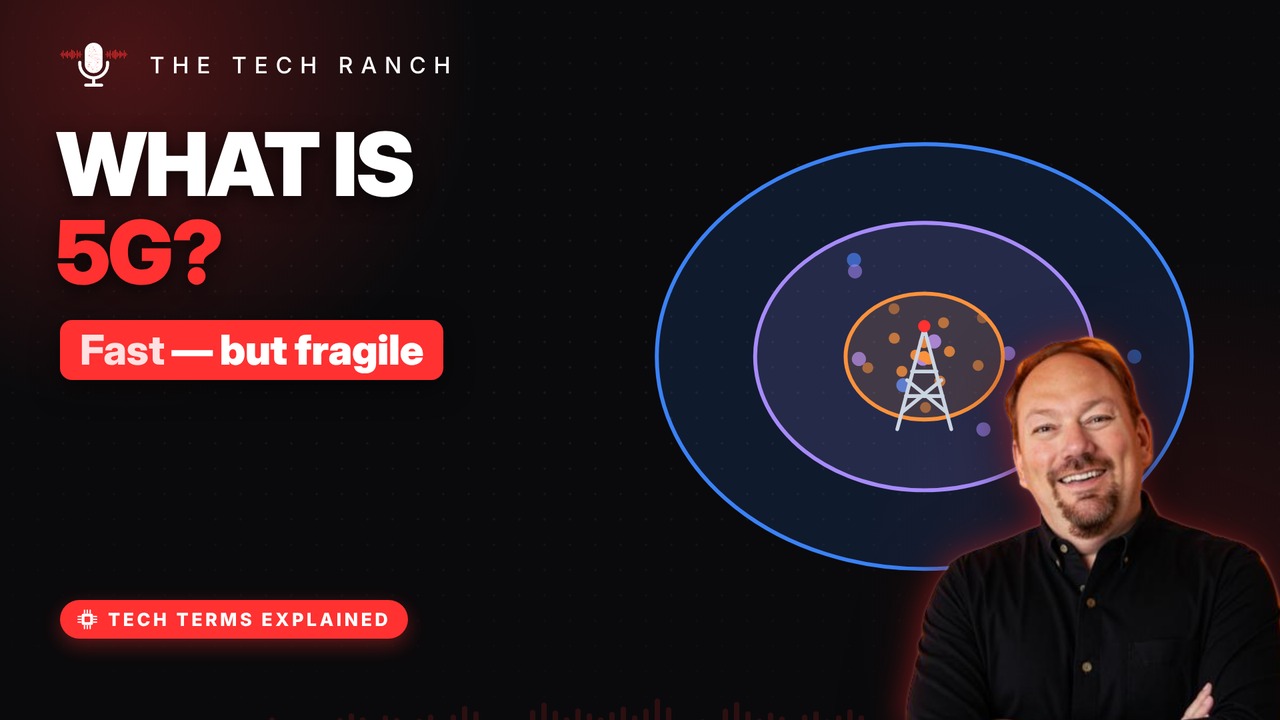
5G uses three ranges of radio frequencies. Low-band: travels far, modest speed. Mid-band: a balance of reach and speed. High-band (mmWave): blazing fast, very short range.
Fast but fragile
The highest 5G frequencies carry huge amounts of data. But walls, glass and even trees can block them. So they need many small antennas close together. That’s why top-speed 5G covers only small areas.
Less waiting
Speed isn’t everything — delay matters too. Latency = the wait before data starts arriving. 5G’s target for critical uses: just 1 millisecond. Real-world delays add more: distance, servers.
Is 5G safe?
5G uses radio waves, like 4G, Wi-Fi and TV. Radio waves are non-ionizing — unlike X-rays. The FCC says phone emissions at current levels are safe. It has said it has no concerns about 5G gear.
Bonus: 5G is not 5 GHz Wi-Fi
5 GHz is a radio band your home router uses. 5G is your cell carrier’s network. Same number, totally unrelated.
More Tech Terms, Explained
This is part of my Tech Terms Explained series: everyday tech words, explained in plain English, with simple animations. Watch the whole series on YouTube and subscribe to The Tech Ranch so you don’t miss the next one.
Found this helpful? Give the video a thumbs up on YouTube. Got a tech word you’d like explained? Ask in the YouTube comments and it might be the next video.