


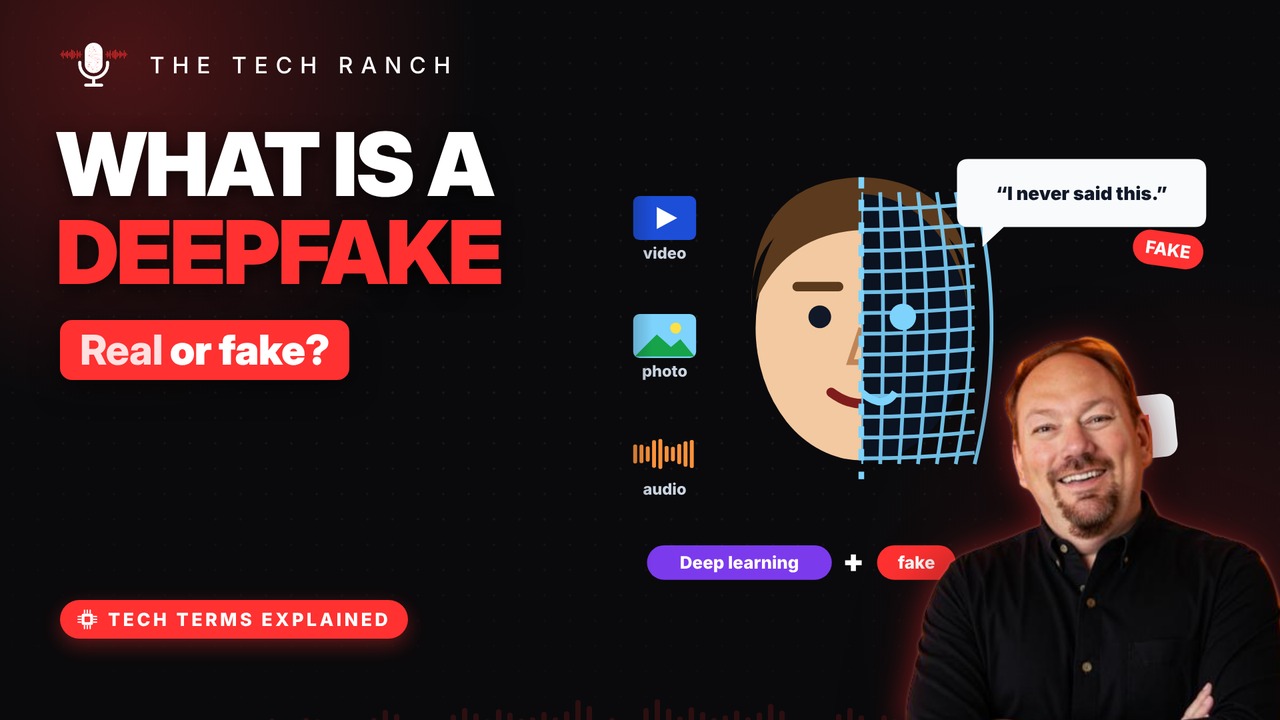
A deepfake is AI-made video, photo or audio that shows a real person saying or doing something they never did. This animated explainer shows how deepfakes are made, why a few seconds of someone’s voice can be enough to clone it, the clues that can give a fake away, and the simple call-back habit that protects your family.
Deep learning + fake
A deepfake is AI-made video, photo or audio of a real person. It shows them saying or doing what they never did. ‘Deep’ comes from deep learning, a type of AI. The word first appeared online in 2017.
How a fake gets made
AI studies lots of photos or clips of a person. It learns how their face moves and their voice sounds. Then it maps that onto new video or speech. Voice models learn from huge piles of recordings.
Just 3 seconds of voice
One research voice model needed just 3 seconds of audio. It could mimic tone and emotion. Scammers use cloned voices in fake family emergencies. A short clip posted online can be enough.
Clues to look for
Skin too smooth or too wrinkly for the face. Shadows or glasses glare that don’t move right. Odd blinking, or lips that don’t match the face. But there’s no single sure sign.
How to stay safe
Urgent call from family? Hang up and call back. Use a number you know is really theirs. Can’t reach them? Check with another relative. Requests for wire transfers, gift cards or crypto = red flag.
Bonus: Why ‘deep’?
‘Deep learning’ uses many stacked layers of math. Each layer picks up more complex patterns. The term was in use by at least 1986.
More Tech Terms, Explained
This is part of my Tech Terms Explained series: everyday tech words, explained in plain English, with simple animations. Watch the whole series on YouTube and subscribe to The Tech Ranch so you don’t miss the next one. Short on time? Here’s the quick Short version.
Found this helpful? Give the video a thumbs up on YouTube. Got a tech word you’d like explained? Ask in the YouTube comments and it might be the next video.