


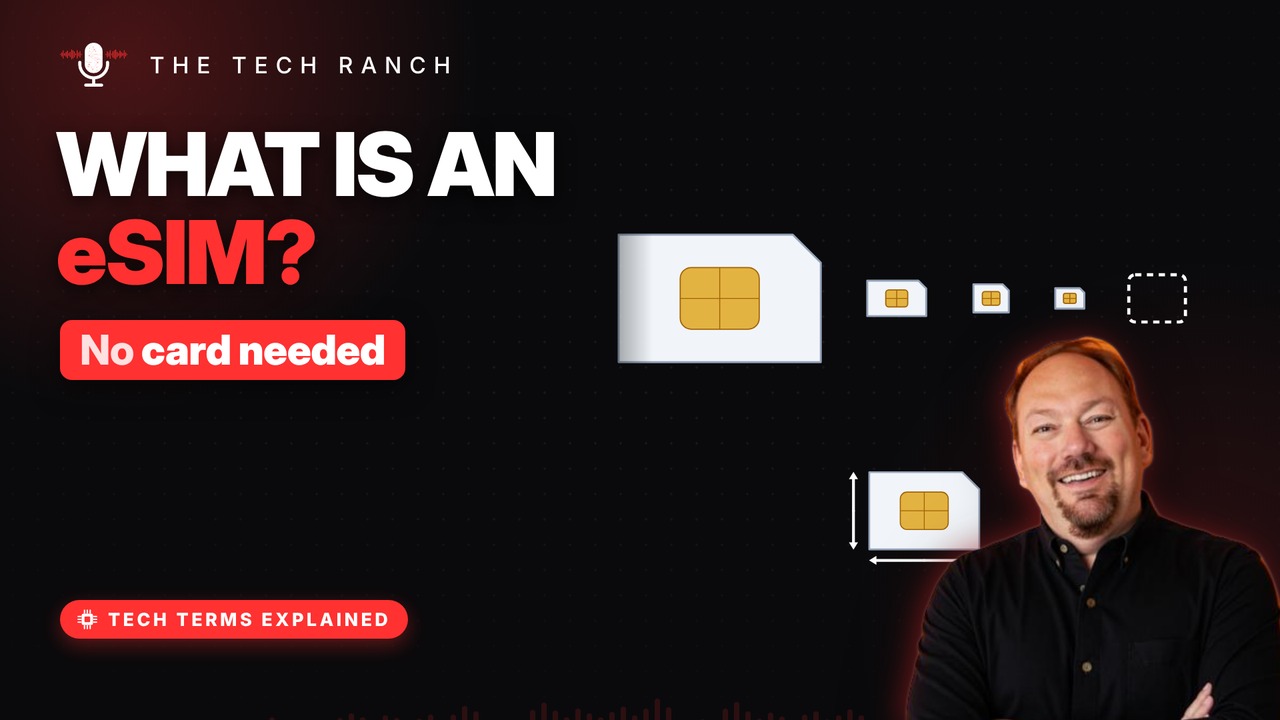
An eSIM is a SIM built right into your phone, so your carrier plan is downloaded instead of inserted. See how SIM cards shrank from credit-card size, how eSIM setup works, and why one phone can hold several plans for travel or work.
What a SIM does
SIM = Subscriber Identity Module. It tells your carrier which account is yours. Without one: no regular calls or cell data. Classic SIMs are small removable chips.
The shrinking SIM
The first SIMs were credit-card sized. Then mini (1996), micro (2003), nano (2012). Nano: about 12 by 9 millimeters. Next step: no card at all.
Built right in
An eSIM is a chip soldered inside the phone. The ‘e’ stands for embedded. About 6 by 5 millimeters — no tray, no pin. Your carrier’s details are downloaded to it.
Setting one up
Your carrier sends a profile: a digital SIM. Usually you install it by scanning a QR code. Often no store visit or mailed card needed. Switching carriers can happen remotely.
More than one plan
Many phones can store several eSIM plans. Often two can be active at the same time. Handy for travel or a separate work line. And a thief can’t just pop it out.
Bonus: eSIMs for travel
Before a trip, add a local data plan as an eSIM. Keep your home number on the other line. Check that your phone is unlocked first.
More Tech Terms, Explained
This is part of my Tech Terms Explained series: everyday tech words, explained in plain English, with simple animations. Watch the whole series on YouTube and subscribe to The Tech Ranch so you don’t miss the next one.
Found this helpful? Give the video a thumbs up on YouTube. Got a tech word you’d like explained? Ask in the YouTube comments and it might be the next video.