

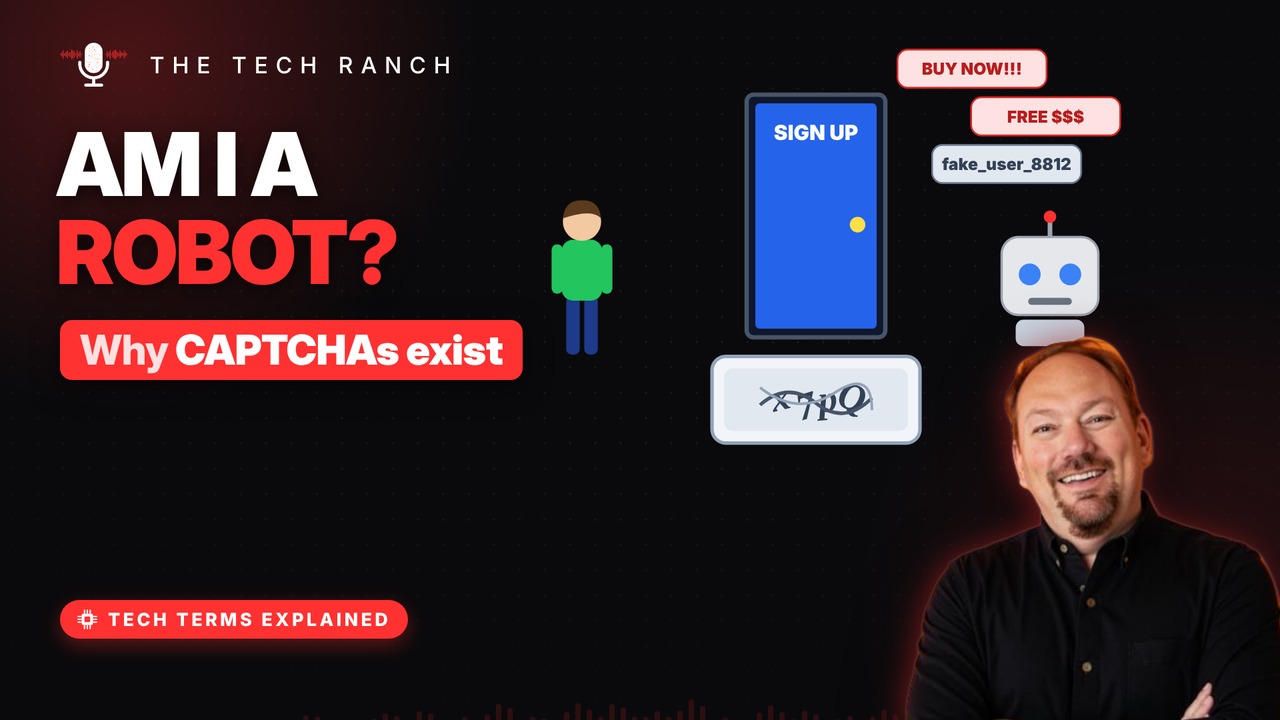
CAPTCHAs are quick tests websites use to tell real people from bots. Learn what the long acronym stands for, how those squiggly words helped digitize old newspapers and books, how the ‘I’m not a robot’ checkbox decides you’re human, and why AI is changing the game.
Human or bot?
Bots are programs that pose as visitors. They spam comments and make fake accounts. A CAPTCHA is a quick test to tell them apart. Easy for people, hard for computers — in theory.
A very long acronym
Completely Automated Public Turing test. …to tell Computers and Humans Apart. A Turing test checks if a machine seems human. Here, a computer is the one giving the test.
You helped save books
Old CAPTCHAs showed squiggly, smudged words. reCAPTCHA used words from scanned old texts. Answers helped digitize newspapers and books. Including The New York Times archive.
I’m not a robot
Since 2014, many tests are just a checkbox. It weighs signals from your browser and device. Look low-risk? You pass instantly. Look risky? You get the picture puzzles.
Traffic lights and AI
Picture puzzles often use street photos. Google says the answers help improve its maps. But AI can now solve many CAPTCHAs. So sites lean more on invisible checks.
Bonus: Stuck on a puzzle?
Most CAPTCHAs have a button for a new puzzle. Many offer an audio version too. A wrong answer usually just brings another try.
More Tech Terms, Explained
This is part of my Tech Terms Explained series: everyday tech words, explained in plain English, with simple animations. Watch the whole series on YouTube and subscribe to The Tech Ranch so you don’t miss the next one. Short on time? Here’s the quick Short version.
Found this helpful? Give the video a thumbs up on YouTube. Got a tech word you’d like explained? Ask in the YouTube comments and it might be the next video.