

Encryption scrambles your data so only someone with the right key can read it. Start with Julius Caesar’s simple letter shift, see why modern keys are far too many to guess, how the ‘open padlock’ trick lets strangers share secrets, and what end-to-end encryption really means.
Scramble with a key
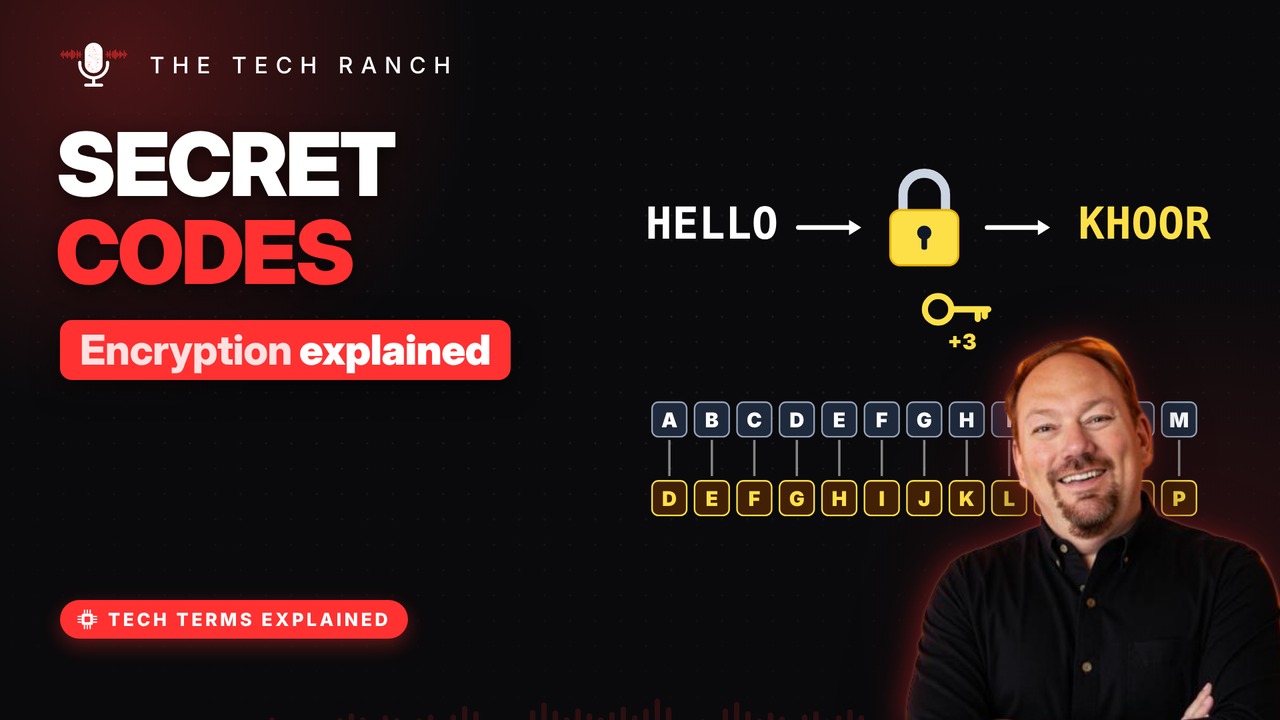
Encryption turns readable data into gibberish. A key is the secret that unscrambles it. Julius Caesar shifted letters 3 places: A became D. So HELLO turned into KHOOR.
Too easy to crack
Caesar’s code has only 25 possible shifts. Just try them all until real words appear. That’s called a brute force attack. Real security needs far more possible keys.
Keys too big to guess
The AES standard (2001) allows 256-bit keys. That’s 2 to the 256th power possible keys. Written out, it’s a 78-digit number. No known computer could try them all.
The open padlock trick
How do strangers share a key without meeting?. Public-key encryption, published in 1976, solves it. Your public key: an open padlock anyone can close. Only your private key can open it again.
End-to-end
Some services encrypt messages only on the way. End-to-end means only sender and receiver can read. Not even the app’s own servers can peek. Look for it in your messaging app’s settings or info.
Bonus: Encrypt your devices too
Full-disk encryption scrambles everything stored. Without your passcode, the data stays scrambled. Some systems don’t turn it on by default — check.
More Tech Terms, Explained
This is part of my Tech Terms Explained series: everyday tech words, explained in plain English, with simple animations. Watch the whole series on YouTube and subscribe to The Tech Ranch so you don’t miss the next one.
Found this helpful? Give the video a thumbs up on YouTube. Got a tech word you’d like explained? Ask in the YouTube comments and it might be the next video.