


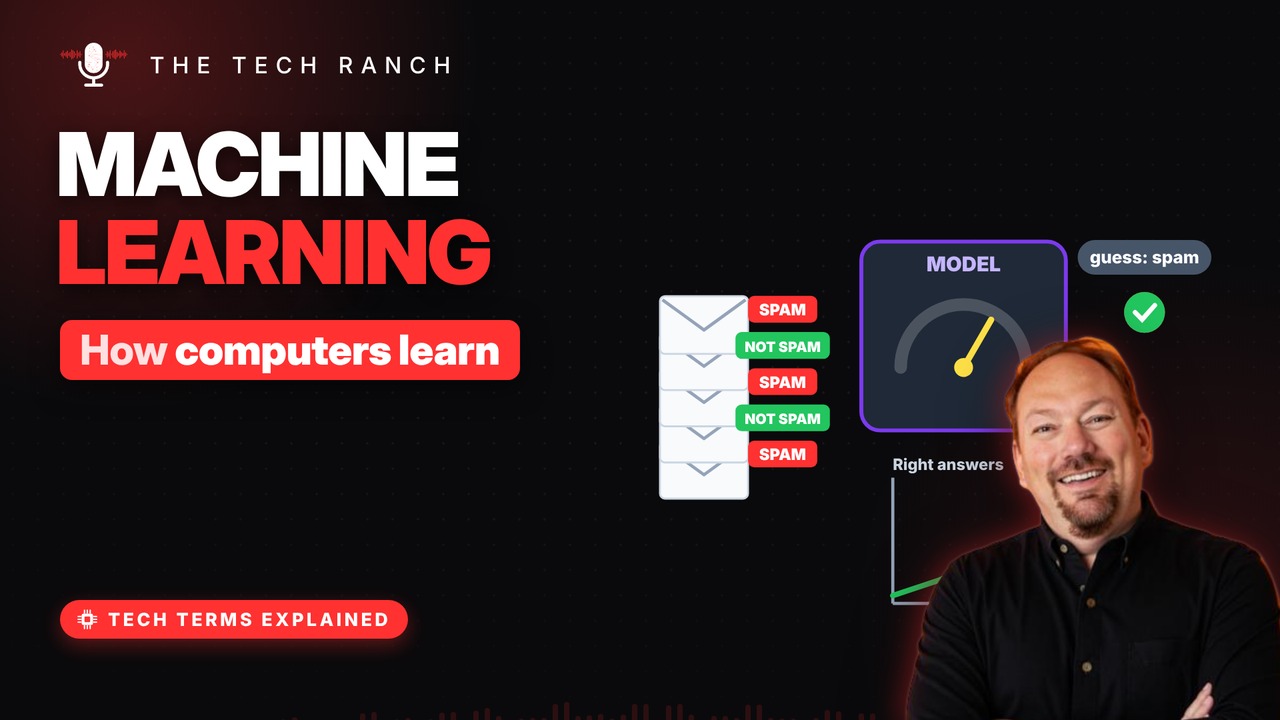
Machine learning is a way of building software that learns patterns from examples instead of following hand-written rules. This animated explainer shows how training works, why models are tested on data they’ve never seen, where you use machine learning every day, and why biased examples lead to biased results.
Examples, not rules
Normally, programmers write every rule by hand. Machine learning flips that: give it examples. It works out the patterns from the data itself. The term dates to 1959 and a checkers program.
Practice with the answers
Training means showing it examples with answers. This email: spam. This one: not spam. It guesses, checks, and adjusts itself a little. Repeat many times and the guesses get better.
The real test: new data
Some examples are held back during training. Then it’s tested on those unseen ones. That shows if it learned, or just memorized. A good model works on things it’s never seen.
Where you see it
Spam filters and fraud alerts. Show and product recommendations. Photo apps that find faces and pets. Voice assistants and chatbots.
Bad examples, bad results
It only knows what its examples taught it. Biased data can lead to unfair results. It can pick up the wrong clue by accident. That’s why people must check how it behaves.
Bonus: It started with checkers
An early researcher taught a computer checkers. It got better by learning from its games. His 1959 paper gave ‘machine learning’ its name.
More Tech Terms, Explained
This is part of my Tech Terms Explained series: everyday tech words, explained in plain English, with simple animations. Watch the whole series on YouTube and subscribe to The Tech Ranch so you don’t miss the next one.
Found this helpful? Give the video a thumbs up on YouTube. Got a tech word you’d like explained? Ask in the YouTube comments and it might be the next video.