

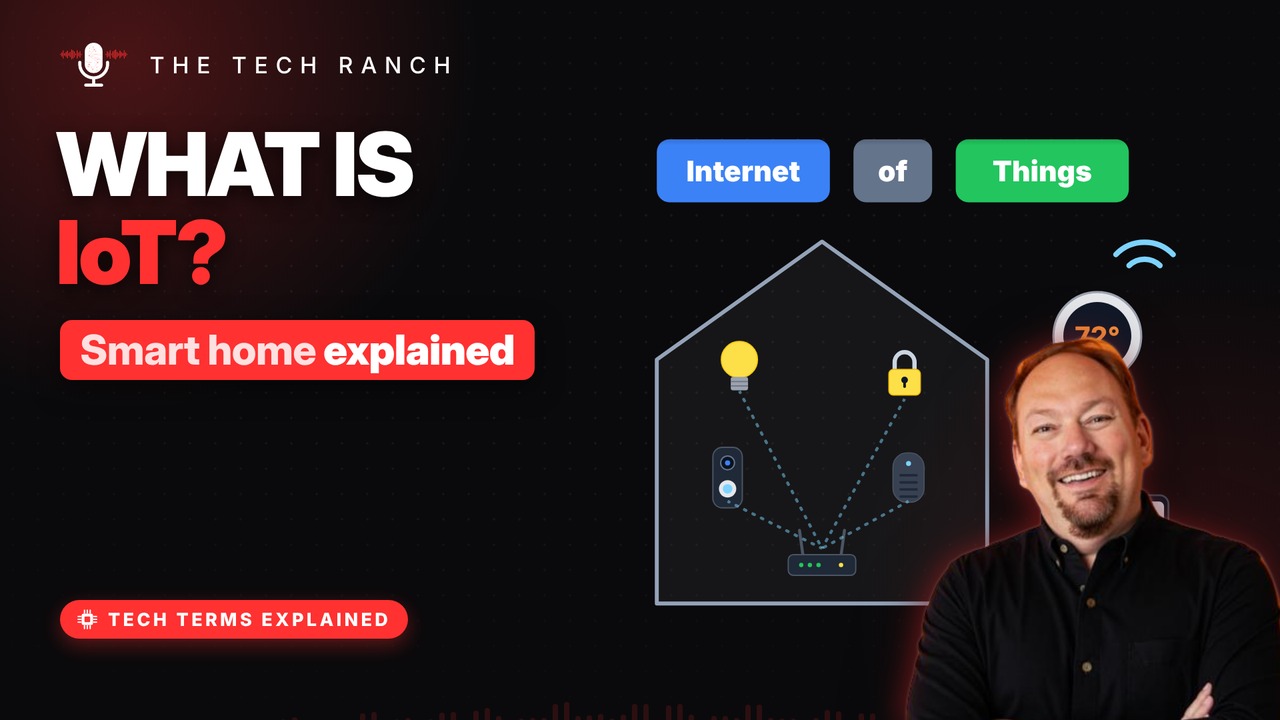
The Internet of Things means everyday objects, like thermostats, bulbs and doorbells, that use sensors and an internet connection. This animated explainer shows how smart home gadgets connect, how it all started with a university soda machine in 1982, and the security and shutdown risks to check before you buy.
Things that go online
IoT = Internet of Things. Everyday objects with sensors and a connection. Thermostats, bulbs, locks, doorbells, speakers. They report what they sense and take commands.
A soda machine started it
In 1982, a university hooked a soda machine to its network. It reported which slots had cold drinks. Students checked it before walking downstairs. A silly idea that pointed to smart homes.
How they connect
Many connect over your home Wi-Fi. Others use low-power radios like Thread. A standard called Matter helps brands work together. Commands often travel through the maker’s servers.
The security catch
Many gadgets ship with factory default passwords. In 2016, malware hijacked cameras and routers that way. It used them to knock big websites offline. Change default passwords and keep updates on.
When the company quits
Many smart features depend on the maker’s servers. In 2022, one smart-home company shut its servers. App controls stopped; wall switches still worked. Before buying, check if it works without the cloud.
Bonus: Who named it?
The phrase ‘Internet of Things’ was coined in 1999. A researcher used it in a company presentation. It stuck as more and more gadgets got online.
More Tech Terms, Explained
This is part of my Tech Terms Explained series: everyday tech words, explained in plain English, with simple animations. Watch the whole series on YouTube and subscribe to The Tech Ranch so you don’t miss the next one.
Found this helpful? Give the video a thumbs up on YouTube. Got a tech word you’d like explained? Ask in the YouTube comments and it might be the next video.