


By Marlo Anderson – The Tech Ranch
For decades, most rocket boosters flew once and were thrown away. Imagine buying a new jet for every trip. Today, boosters come back and land themselves, and some fly dozens of times.
Use It Once, Throw It Away
After launch, the big first stage of most rockets fell into the ocean. That meant building a whole new rocket for every single launch.
How a Booster Comes Home
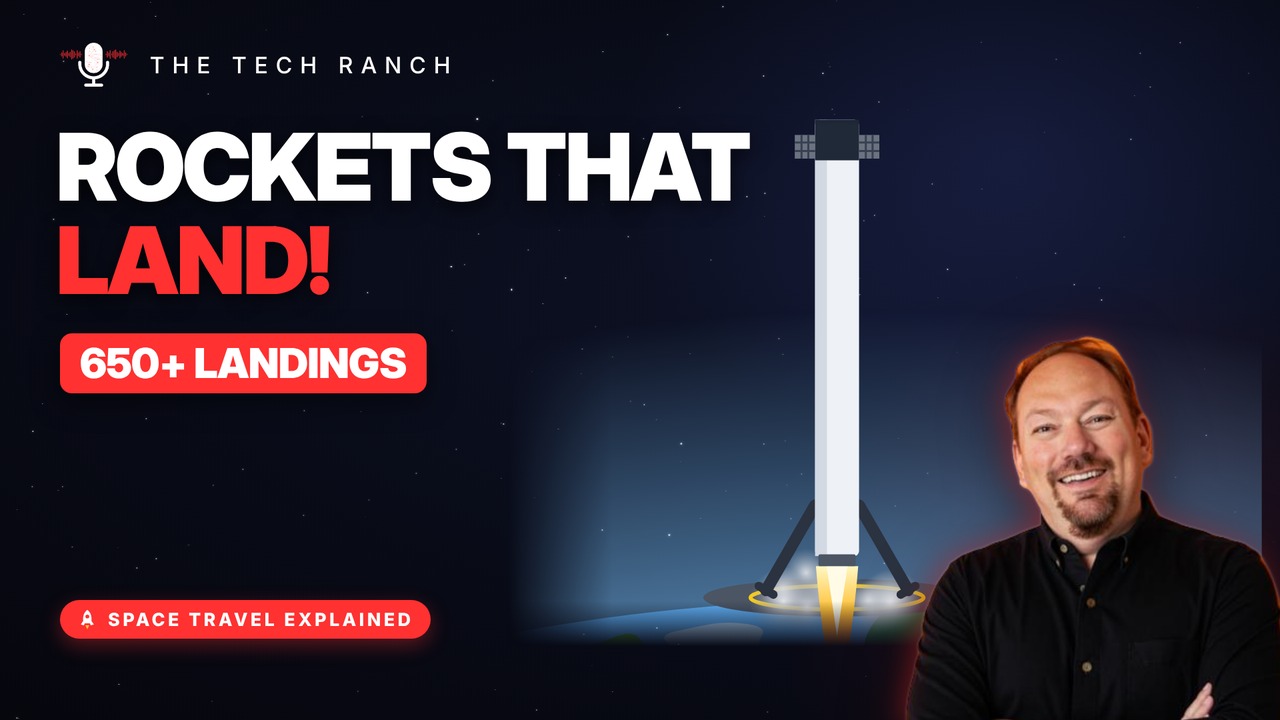
After separating, a reusable booster flips around, fires its engines to slow down, steers with grid fins, unfolds its legs and lands upright.
Back on Land, or Out at Sea
Some boosters fly back and land near the launch site. Others land on a drone ship far out at sea. It depends on how much fuel is left over after the launch.
By the Numbers
SpaceX boosters have now landed more than 650 times, and one single booster has flown more than 35 times. That’s more like an airliner than a one-shot rocket.
Now They’re Catching Them
In October 2024, SpaceX caught a giant Super Heavy booster with the launch tower’s arms. In November 2025, Blue Origin landed its New Glenn booster on a ship at sea. More companies are racing to reuse their rockets.
Bonus Fact: The Space Shuttle
The Space Shuttle was partly reusable too. Discovery flew 39 missions between 1984 and 2011.
More Space Travel, Explained
This is part of my Space Travel Explained series: big space questions, answered in plain English with simple animations. Watch the whole series on YouTube and subscribe to The Tech Ranch so you don’t miss the next one. Short on time? Here’s the quick Short version.
Found this helpful? Give the video a thumbs up on YouTube. Got a space question you’ve always wondered about? Ask it in the YouTube comments and it might be the next video.